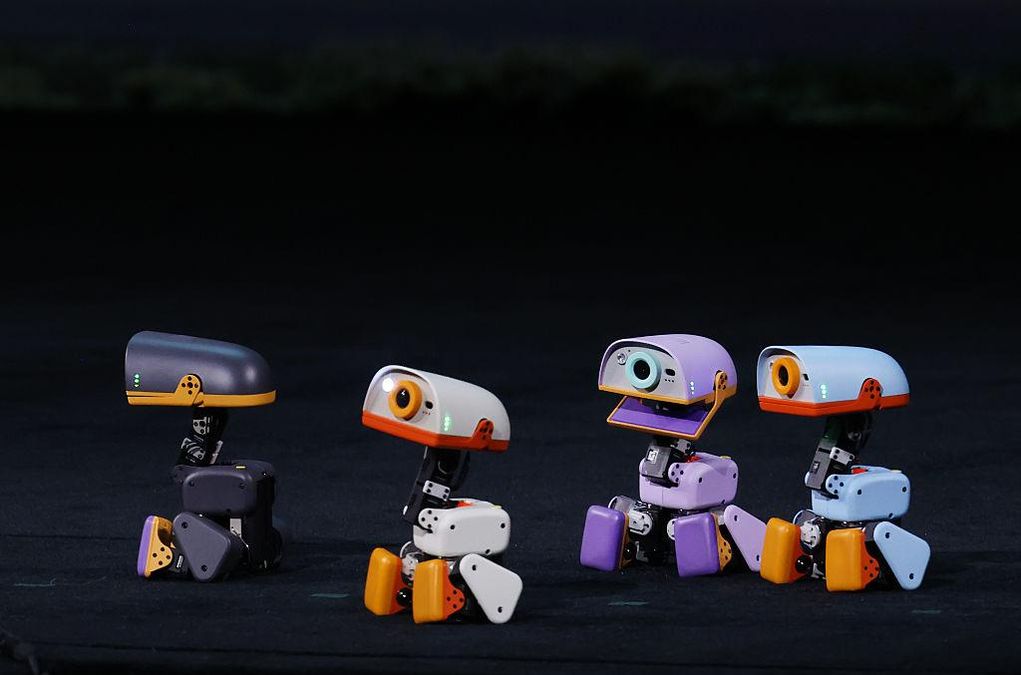
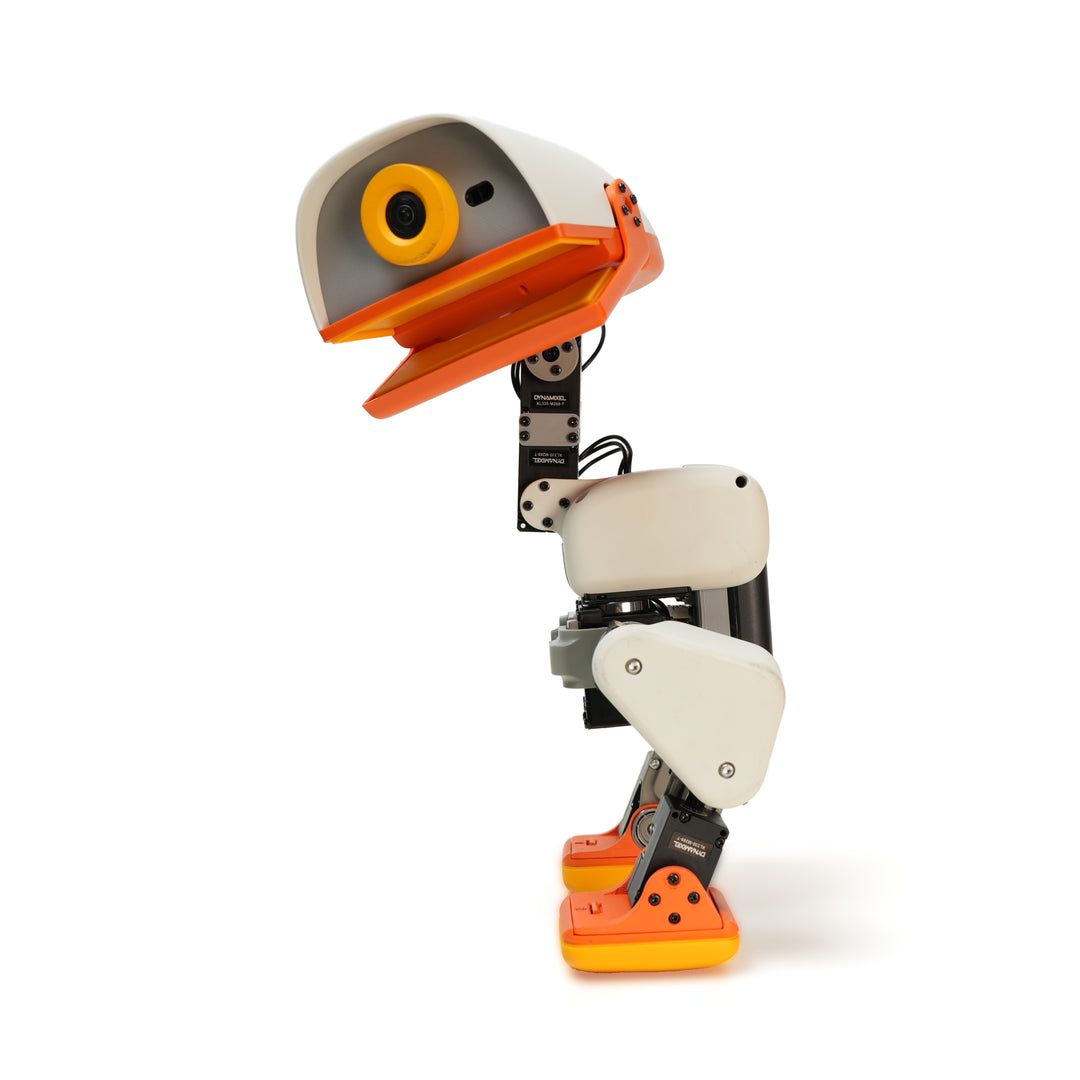
How did NVIDIA teach Microduck to walk?
NVIDIA's technical walkthrough, published on October 23, 2026, explains the process behind the demonstration.
1. Describe the task with a prompt.
The process starts with a description of the desired robot behaviour and the obstacles it must navigate. AI agents help turn the instructions into a development plan.
2. Prepare the virtual environment.
Tools including FreeCAD, Blender and NVIDIA Omniverse libraries help create and prepare the assets used in the simulated environment. NVIDIA Isaac Sim is used to assemble the virtual scene and robot.
3. Simulate the robot's physical behaviour.
The simulated robot has articulated links, joints and actuators. Physics simulation models how it moves and interacts with the environment.
4. Train the movement policy.
NVIDIA Isaac Lab supports reinforcement learning. In this process, simulated attempts produce feedback that helps improve the policy governing the robot's actions. NVIDIA's technical account describes cloud-based training across thousands of parallel simulated environments for the obstacle-navigation experiment.
5. Evaluate the result locally.
The trained policy is brought back for evaluation in Isaac Sim on RTX Spark. Developers can examine the robot's movements, obstacle handling, falls and course completion before proceeding to physical deployment.
6. Transfer the validated behaviour to the real robot.
The final stage is deploying the selected policy to physical hardware. Real-world behaviour may still require refinement because a simulation cannot perfectly reproduce every physical condition.
Read NVIDIA's full technical explanation.
Can you build something similar at home?
Yes, you can begin learning the same underlying concepts without immediately buying Microduck or RTX Spark. However, reproducing the entire demonstration requires compatible hardware, software, technical setup and computing resources.
Three ways to get started
Option 1: Start with simulation.
Explore robot simulation and reinforcement learning using NVIDIA Isaac Sim and Isaac Lab. Begin with a supported example before attempting to recreate Microduck's specific configuration.
Option 2: Build a budget robot.
Experiment with a programmable robotics kit, sensors and basic movement control. This is a practical way to learn motor control and robot programming, although a simple kit will not automatically reproduce Microduck's learned bipedal movement.
Option 3: Build a more advanced local AI development setup.
Investigate NVIDIA RTX Spark alongside compatible robotics software and a suitable physical robot. Check software compatibility, memory requirements and the computing needs of each training stage before purchasing equipment.
Is NVIDIA RTX Spark worth buying for robotics?
RTX Spark is worth investigating if you want a compact platform for local AI development and robotics simulation workflows. It is not a substitute for every component in a robotics training pipeline.
Before buying, establish whether your intended workload needs local inference, simulation, large-scale reinforcement learning or physical robot control. Those requirements determine which parts of the setup need dedicated hardware and which can use remote computing.
Explore NVIDIA's official DGX Spark product information.
Where can you buy Microduck?
Start with the manufacturer's website to check current availability, configuration options, pricing and shipping terms.
Check Microduck product availability. Demand from the community has been high: Pollen Robotics is ramping up production, but you should expect current pre-orders to ship after April 2027. First ordered, first shipped.
For readers in India, confirm international shipping, import duties, applicable taxes, warranty coverage and returns before ordering. For readers in the US, verify the final delivered price and expected shipping date.
Final verdict
Microduck's demonstration is a useful illustration of how AI-assisted development can connect software, simulation, cloud training and physical robotics.
For aspiring developers, the best starting point is to understand the workflow before purchasing hardware. For experienced developers, RTX Spark may be a useful component of a larger physical-AI development setup.
The real story is not that a prompt magically makes a robot walk. It is that a carefully engineered development pipeline can make sophisticated robot-learning experiments more accessible.
Related reading on Smart Shopper
If you're weighing the hardware side of this workflow, our AI/ML guides cover the same trade-offs in buyer terms: the best AI/ML laptops under ₹1 lakh for budget local setups, premium AI/ML workstations for serious local compute, NVIDIA vs AMD vs Apple for AI workloads, and what the CUDA vs non-CUDA distinction means for training tools like Isaac Lab. You can also browse AI-capable laptops on Amazon India.